top of page
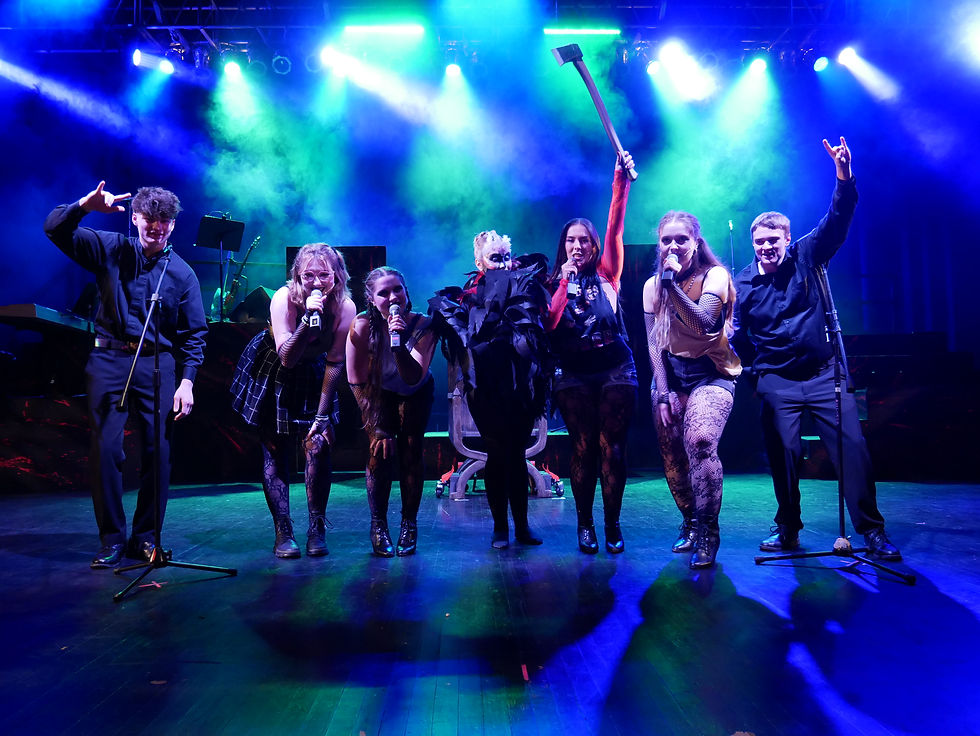
Lizzie the Musical Part 1
Photographer: Lonnie Martin Design: Adalia (Costumes), Cindy Martin (Set), Joseph Birchland (Lights), Marissa Mallow (Makeup)

Cinderella Part 1
Photographer: Mountain Thistle Studio Design: Adalia (Costumes), Cindy Martin (Set), Joseph Birchland (Lights), Marissa Mallow (Makeup)

Too Much Light Makes the Baby Go Blind
Photographer: Lonnie Martin Design: Aubrey Helene Neumann (Set, Lights)
Lizzie the Musical Part 1
Photographer: Lonnie Martin Design: Adalia (Costumes), Cindy Martin (Set), Joseph Birchland (Lights), Marissa Mallow (Makeup)
1/7
Lights
The lighting designer can transport an audience, direct their attention, or set the mood all with a few clicks of a light board. In this sense, lights are by far the most versatile of design elements and possibly my favorite. I first learned how to read a plot (the light blueprint, if you will), hang, circuit, focus, and program lights in high school, where our proximity to ETC, the Electronic Theatre Company, meant we had access to some of the best equipment available. I've dabbled in lights ever since, learning more in undergraduate and designing shows in small, indie spaces.

Design: In my early years at Davis & Elkins, few individuals and even fewer students could work the lights in the newly renovated Harper McNeeley Auditorium. To rectify this problem, I secured a Speaker Grant to bring Kelsey Gallagher to campus for a three-day lighting intensive in Fall 2023. Gallagher, the Exhibit Lighting Designer for The National Museum of the United States Air Force as well as a freelance lighting designer in Ohio, introduced me to LED light controls and helped to reverse engineer a lighting plot. Consequently, I was able to step in as lighting designer for our fall production when our regular lighting designer came down with COVID. I designed three shows over the 2023-2024 academic year: The Tempest, Twin Flame, and Legally Blonde The Musical. I also designed two of the one-acts in Game Over and assisted with lights on multiple senior theses.
Maintenance: While much of the light design process takes place in the week leading up to a show, maintaining the space is a year-round task. We inherited a number of old instruments and ultimately decided to liquidate them, saving what parts we could and recycling the rest. Together with the occasional light shop student worker and Light Lab students, we've hung a repertory plot, which we return to after each show, and begun organizing the backstage right loft for lighting equipment. In addition to hanging lights (safely securing them overhead), this work entails circuiting (connecting instruments to power and data) and focusing lights (directing lights to focus on the right area). Because of existing safety concerns, I am one of the only people to work in the catwalk above the auditorium and climb ladders to focus the truss above the stage. I continued to do this work through the first trimester of my pregnancy, ensuring that the reperatory plot was in place for those months when I was unable to safely focus lights.
Student Opportunities: While a couple of students took part in Gallagher's intensives, the greater impact has been through my own teaching. At the students' request, I offered a brief introduction to lighting in directing class, taught a one-credit Light Lab course in Fall of 2024, and included a light unit in the Introduction to Design and Technology course in Spring 2026. One student in particular thrived in these courses and has since designed three of the mainstage shows at Davis & Elkins College (left and above). I now advise the student on standard practices and organizing purchase requests.

bottom of page