top of page
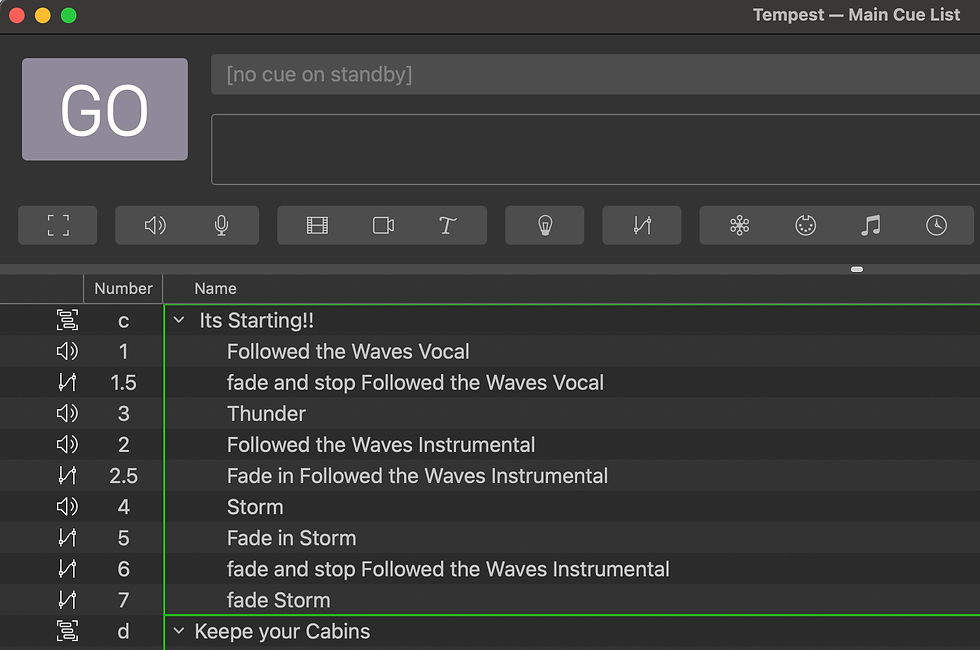
QLab Tempest Workspace
QLab Tempest Workspace
1/1
Sound Effects
Sounds help the world of the play cohere: ocean waves set the scene, a mystical gong brings magic to life, and 90s grunge music marks the sound of an era.
Design: For every show that I have directed, I also pull sound effects, transition music, and pre-show songs. I then program the tracks in QLab, setting the order, duration, volume, and other parameters. The opening sequence of the Tempest (above) provides an example of this, beginning with a musical transition, followed by thunder, ocean storm, and a cross-fade to an instrumental piece. As the opening choreography concludes, the sound fades under the character's opening lines. This proved particularly challenging in tech as I was simultaneously programming light and sound cues as well as directing. I used the experience as a learning opportunity for my students - teaching them how to use the software and soliciting their advice as we worked through the show.
Most recently, I learned the Stage Tracks and Show Ready software to edit tracks for Cinderella. The software allowed us to feature the sound of a full orchestra that would otherwise not have been possible, given space, budget, and personnel constraints.
Student Opportunities: In addition to teaching sound board operators the basics of QLab and Stage Tracks/Show Ready, I also taught a sound unit in Introduction to Design and Technology and worked with a student programmer on Failure: A Love Story and She Kills Monsters. I sourced much of the material before meeting with the student to create a cue list. This preparatory work proved valuable both in teaching the student and streamlining the programming process.
bottom of page